# Why Water Runs Straight Through Pots
Contents
You water your basil. Seconds later, the saucer is full, the kitchen counter is wet, and the pot still feels suspiciously light. An hour later, the leaves are drooping. Where did all that water go?
This is one of the strangest tricks a container garden can play. Water can escape through the drainage holes without properly soaking the soil around the roots. Before you pour in another watering can, try a quick detective test.
# The two-minute test that reveals the problem
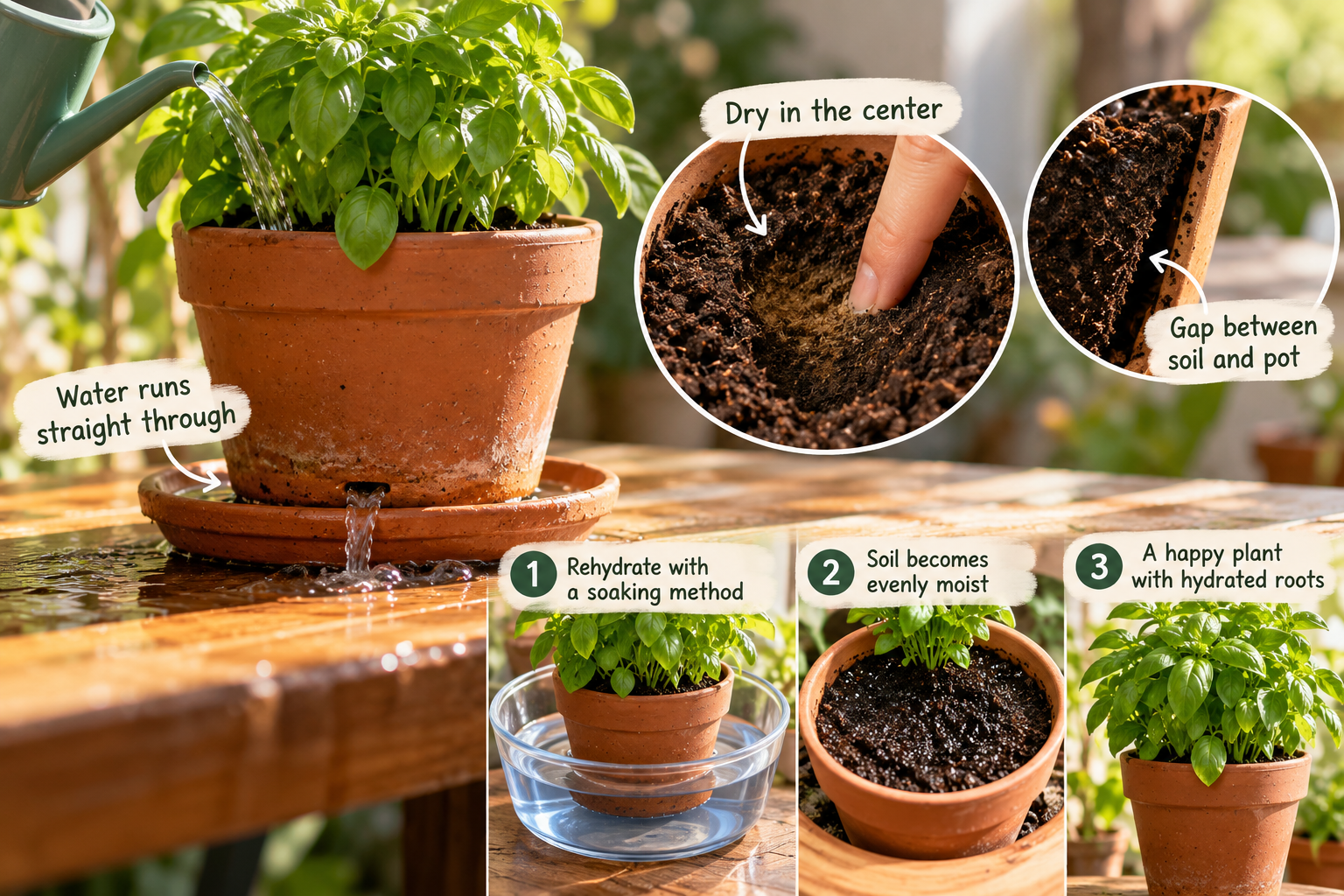
First, lift the pot before watering. Notice its weight. Water slowly until a little runs out, wait five to ten minutes, and lift it again. If it still feels almost as light as before, much of the water may have bypassed the root ball.
Next, push a finger or wooden chopstick a few inches into the mix, away from the main stem. A damp surface with a dry center is the giveaway. If the pot is small, you may also notice a gap between the dry potting mix and the container wall. Water often finds that gap and takes the easiest route straight out.
There is an important exception: very coarse orchid mixes and some succulent mixes naturally drain quickly. Judge them by the needs of the plant and the moisture remaining near its roots, not by drainage speed alone.
# Why potting mix sometimes refuses a drink
Many bagged potting mixes contain peat, bark, or other organic ingredients. These ingredients help hold moisture when properly wetted. After they become extremely dry, some mixes resist soaking up water again. Gardeners call this hydrophobic soil, which simply means water repellent.
The effect can show up in a pot forgotten during a heatwave, a seedling left too long on a sunny shelf, or even a new bag of potting mix that has dried out in storage. A crowded root system can make matters worse by leaving little room for water to enter the mix.
UC Master Gardeners’ advice on hydrophobic soil describes exactly this problem: water may race along the sides of a dry root ball while its center remains thirsty.
# How to rehydrate the pot without drowning the plant
The goal is simple: give the existing mix enough time to absorb water, then let the excess drain away.
**1. **Check for drainage holes. If the pot has none, move the plant into a draining inner pot before attempting a thorough soak.
**2. **For a small or medium pot, place it in a basin with a few inches of room temperature water. Let moisture move up through the drainage holes. Check the mix after 20 to 30 minutes; very dry pots may need longer. Remove the pot once the root ball is evenly moist.
**3. **For a severely dried root ball, briefly immerse the pot in water, keeping foliage and the plant crown above the surface when possible. Wait until the bubbling subsides, then lift it out and drain completely.
**4. **For a heavy patio container, apply water in several slow passes. Pause between passes so water can soak in instead of flowing over the edge or down the sides.
Afterward, allow the container to drain freely. Empty the saucer and check the moisture again near the roots. Leaving the pot standing in water for hours after it is hydrated can create a different problem: roots deprived of air.
# What if the soil dries out again tomorrow?
An extremely rootbound plant can drink through its available moisture quickly, especially in a small pot. If roots circle densely around the outside of the root ball or emerge from the drainage holes, consider moving the plant into a container only slightly larger than the current one.
Heat, wind, dark containers, and unglazed clay can also speed up drying. Move a struggling pot away from harsh afternoon sun when its plant permits, group containers where appropriate, or add a thin mulch layer to reduce surface evaporation. Avoid piling mulch against stems.
If the potting mix has collapsed into fine, compacted material, rewetting may help only briefly. Repotting with a fresh mix suited to the plant may be the better long term solution. Moisten the new mix before planting so it feels like a wrung out sponge.
# Stop using the drainage hole as a watering gauge
A little water in the saucer tells you that water reached the bottom of the container. It says very little about how much reached the active roots along the way. Get used to comparing the pot’s weight and checking moisture below the surface.
For people juggling several containers, a digital soil moisture meter can help compare spots and depths after the mix has been properly rewetted. Treat the reading as one clue alongside the plant, pot weight, and feel of the soil.
Here is the small habit that prevents the next mystery: check the center of the pot before assuming a quick drain means a successful watering. Your plant cares about the water that stays where its roots can reach it.