# A 7-day language-learning routine built around small focus sessions
Learning a language isn’t just about how long you sit at a desk. A short, clear task that you actually finish can be more useful than a vague promise to study all afternoon. Here is one practical way to organize a week of vocabulary, listening and writing without turning every day into a race against the clock.
Contents
# The weekly plan
| Day | One thing to finish | Suggested focus block |
|---|---|---|
| Monday | Review 20 vocabulary items and note unfamiliar words | 25 minutes |
| Tuesday | Listen to one short dialogue twice | 25 minutes |
| Wednesday | Write five original sentences with new words | 25 minutes |
| Thursday | Read one short article and underline useful phrases | 25 minutes |
| Friday | Review Monday’s missed vocabulary | 25 minutes |
| Saturday | Talk aloud or record a short summary | 15–25 minutes |
| Sunday | Look at the week’s notes and set next week’s target | 15 minutes |
These are examples rather than rules. For a difficult task, start with ten minutes. If you are ill, busy or simply exhausted, you can reschedule. Nothing breaks when a plan changes.
# Turn a vague intention into a visible card
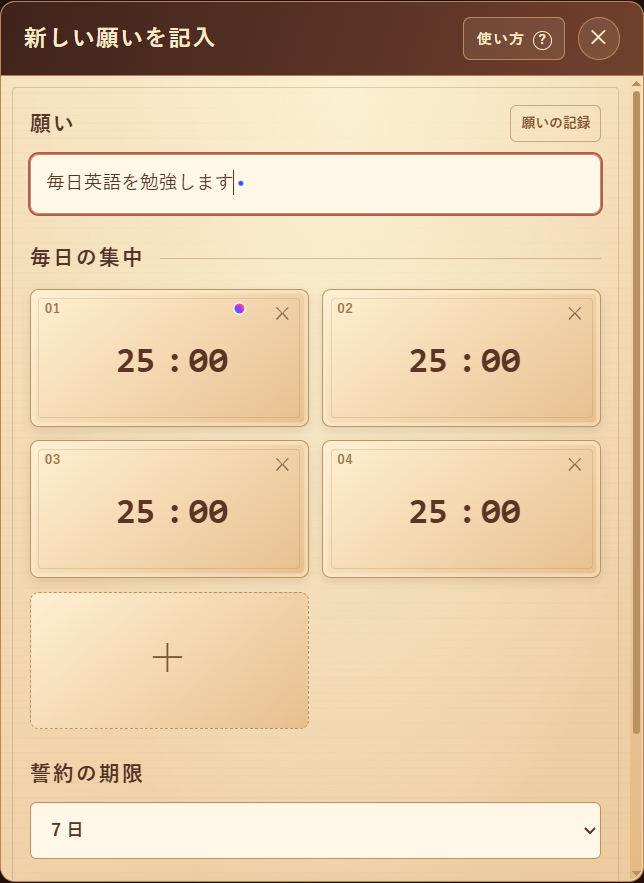
Before pressing Start, write down what would make the next block complete. “Study English” is too broad; “review ten irregular verbs and write two example sentences” is easier to check. Keeping a separate card for each task makes it easier to stop at a natural point and choose the next action.
# Use a starting ritual, not pressure
A small ritual can help mark the switch from planning to doing. It could be opening a notebook, clearing one corner of your desk, or writing a single sentence about what you will work on.
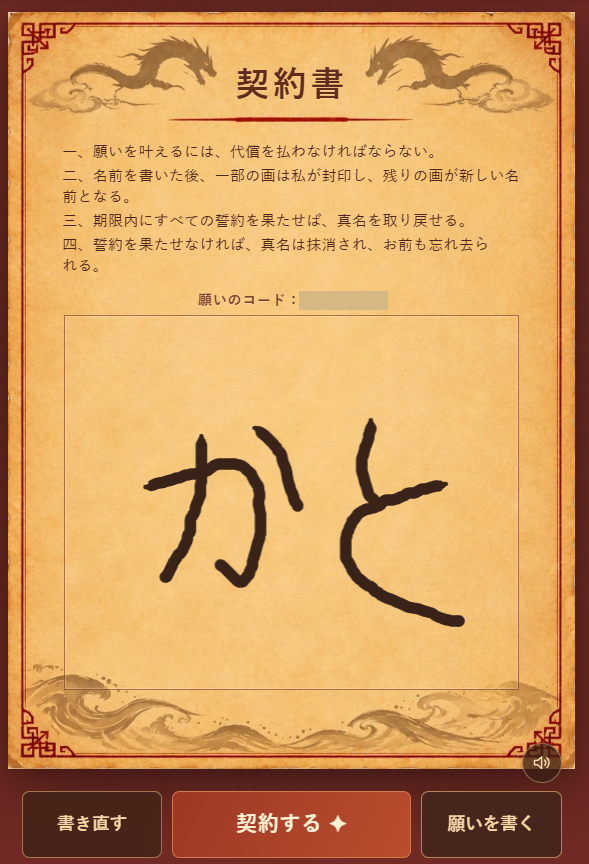
The browser game NamePact takes a playful approach: you write a personal goal and symbolically sign a “name contract.” This isn’t a legal promise or a guarantee of success. It is a game-like moment of commitment before you return to daily tasks.
# Keep the timer in its place
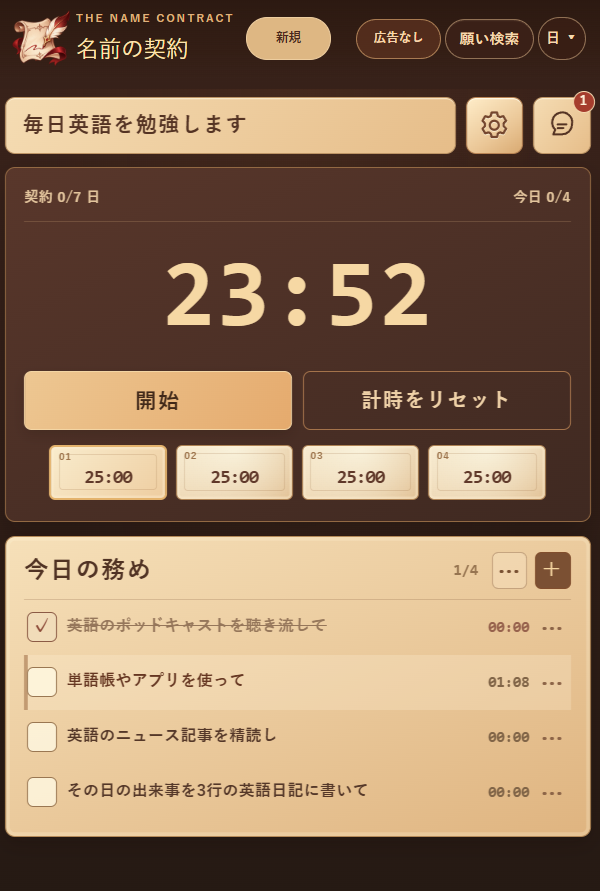
A countdown is useful when it creates a boundary around one task, not when it becomes a score to chase. Start the timer only after your materials are ready. When it ends, take a break, record what you learned and decide if another block would help. Some tasks need quiet thinking, and not all progress is visible in the number of finished cards.
# If you share progress, share it safely
A screenshot of a focus card may help friends encourage you, but always check whether your real name, contact information, school, workplace or invitation codes appear in it. Crop or obscure details that other people don’t need to see. Encourage one another without keeping a public leaderboard of who worked the longest.
NamePact combines the symbolic contract interaction and a focus-timer workflow. You can see how the experience works on the official Japanese NamePact browser-game page. The site also has other language options.
Independent instructional guide. It describes a possible study routine and does not promise academic results.